
Category Archives: Uncategorized
Successful ISO Certification
Grand Opening FILTROX Southern Europe
On November 10, 2022, the grand opening ceremony of the new premises of FILTROX Southern Europe took place. Together with long-standing partners, customers and distributors, the event were celebrated with various presentations, visits and a social get-together.
TAKEOVER OF SCHMID AUTOMATION – Management Buy-Out
Simon Sauter completes management buy-out
We are pleased to inform you that the management buy-out process of Schmid Automation AG, which has started five years ago, has now been completed. Simon Sauter takes over the entire business, including its subsidiaries Schmid Automation GmbH, Augsburg and Schmid Schaltanlagen AG, St. Gallen, retroactively per 1st of November 2022. Simon Sauter has been Managing Director of Schmid Automation since 2017 and already held a minority stake in the company. Until now, the remaining shares belonged to FILTROX Holding AG. In the future, FILTROX wants to focus entirely on its core business, which is depth filtration of valuable liquids.
“Simon Sauter is the ideal owner for Schmid Automation AG. As an experienced engineer and
long-standing managing director, he is perfectly prepared to lead the company successfully
into the future”, Dr. Cristian Rusch, CEO of FILTROX, is quoted. Simon Sauter adds: “It gives
me great pleasure to further develop the topics of digitalization for the benefit of our
customers with our highly motivated team”. …
Frying Oil Quality Parameters
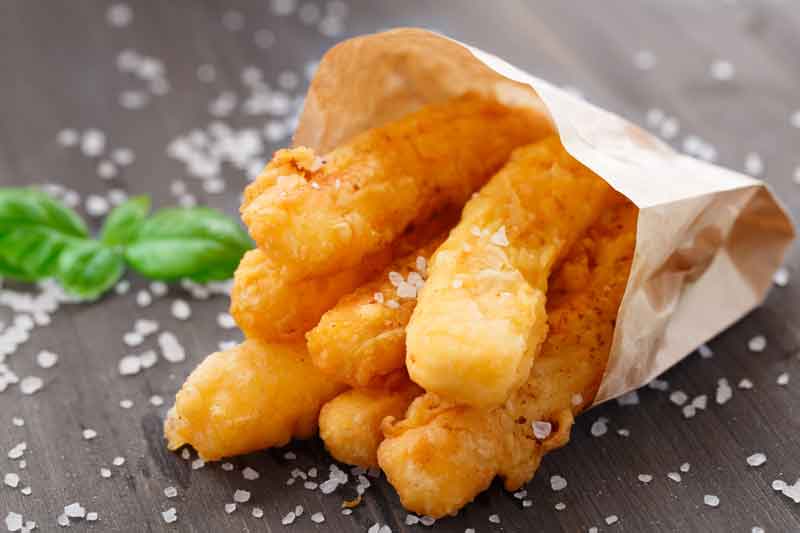
Frying is a traditional method for food preparation in the food service industry around the world. As frying process is carried on, frying oil degrades. The quality of the products from deep-fat frying depends not only on the product itself and the frying conditions, but also on the frying oil quality.
Not measuring frying oil quality frequently and regularly may cause operators to discard it prematurely or uses it beyond its quality limit point. That will cause money loss either by frying oil wastage or poor quality of the fried product.
Throughout the food service industry, there are several methods to determine frying oil quality discard point. Below are some common parameters used.
Frying oil color
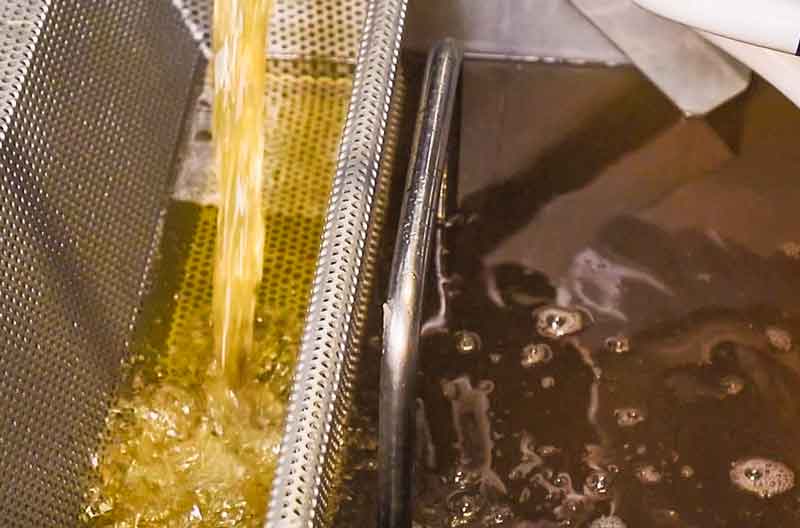
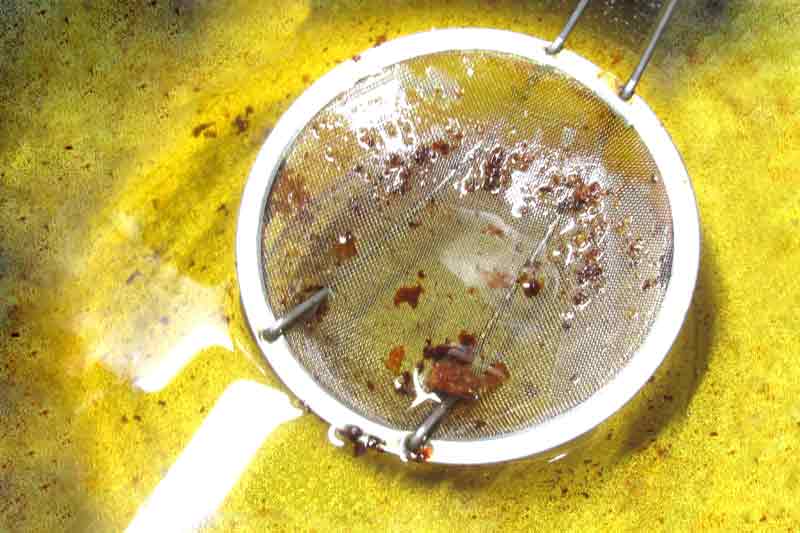
It is a test based on the appearance of the frying oil to determine its discard point. In some cases, it is done by defining a visual point inside the frying vat where it can be seen through the frying oil. It can be either the heating components, the vat bottom, frying basket base or a metal rod with a disk on its base. If it is still possible to see it, the oil quality will be acceptable.
Another option is the color test kit. It consists of one small tube in between two color rods, one light color and the other one darker. Frying oil sample is poured in the center tube and compared with the 2 rods. Once the oil sample drawn matches the darker rod, it is time to discard the oil. It is a low-cost method, but one that is prone to operator interpretation.
Smoke
The test is based on human sensory perception. If smoke is coming out of the frying oil, it is beyond discard point. In extreme cases, there is a risk of the oil catching fire.
Oil rancidity and volatile compounds can be detected via smell, which may mean that the oil is beyond proper discard point. The method is quite inaccurate and can lead to discarding frying oil too late.
Free fatty acid measurement
The test measures free fatty acids (FFA), which is a frying oil quality parameter in some countries. It can be performed via test strips or with handheld devices. With test strips, they are dipped in the frying oil and then withdrawn. Frying oil FFA value is read comparing test strip against a color guide. The disadvantage of this method is the difficulty in interpretations and accuracy, the need to keep the strips under refrigeration and the cost per test. Handheld devices measure FFA based on dielectric constant calculation and are more accurate than test strips.
Total Polar Materials (TPM) measurement
Also known as total polar components (TPC) and is considered the chemical index of frying oil deterioration by measuring cumulative degradation products. The level of polar components is a good indicator of frying oil quality. Most countries around the world have legislation or recommendation regarding maximum percentage levels of polar components in frying oil. TPM values can be measured with handheld devices quickly and safely. Modern fryers already have a built in TPM measurement system.
If you want to learn more about the frying oil quality parameters and the test methods or other frying oil technical topics, please contact FILTROX.
Frying Oils and its Characteristics
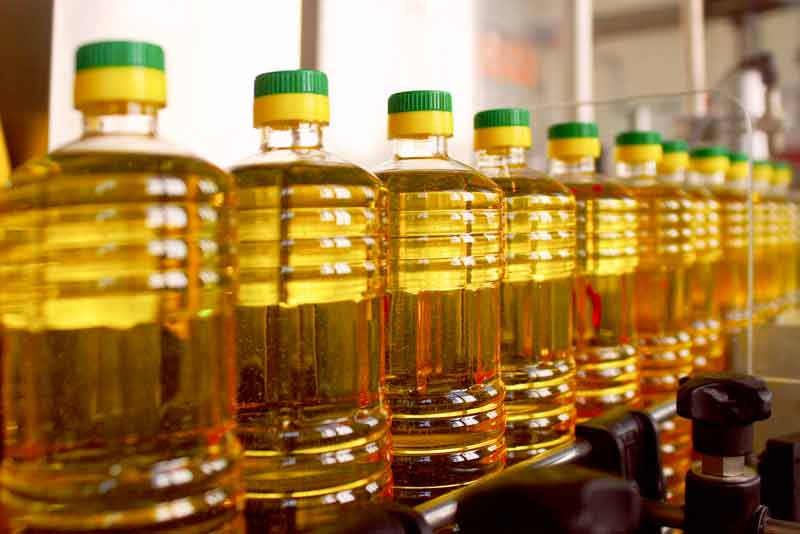
Fried foods are popular all over the word. The frying oil or fat plays a very important role in the food service industry and has a direct impact on the food quality as well as in other aspects of the operation. This is about the about frying oils characteristics.
The Frying medium can be categorized as fat or oil. While oils are typically liquid at room temperature, fats retain a solidconsistency at room temperature, like lard or tallow and some palm.
Choosing the right oil
There are many oils and fats available for frying in the market. The selection of frying media should be based on the optimization of the cooking process, with regards to nutritional facts, flavor profile, stability as well as costs involved.
From a health point of view, the frying oil or fat of choice should be rich in polyunsaturated fatty acids (linoleic and
linolenic acids). Unfortunately, oils and fats with that characteristic are too unstable for the harsh frying process. Also, oils with linolenic value higher than 3 % should be avoided as they may leave a fishy flavor within the food and the deep-frying medium.
To best fit nutritional and stability requirements, the fat and oil industry have been developing products that are low in saturated, linoleic and linolenic fatty acids and having at the same time higher amounts of the monounsaturated oleic acids. The downside of these oils are the higher price and lower availability when compared to regular products. To overcome it, edible oil manufactures have developed blends of different oils to balance cost, performance, availability and nutritional facts.
Below are the main types of oil and fats used in commercial frying.

Canola oil
Also known as rapeseed oil with light yellow color. It is high in unsaturated fatty acids, so it needs to be modified to to achieve the stability required for commercial frying. The rapeseed oil has an oleic acid content and is suitable for frying. However, the price can be a bit high.

Corn oil
An amber colored oil with certain desirable unique flavors. It is relatively low in saturated fatty acids and rich in polyunsaturated fatty acids. For this reason, it may be less stable for the frying process.

Cottonseed oil
It is considered the first commercially available vegetable oil in the Americas. It delivers a nutty, buttery flavor to fried products. Cottonseed oil contains practically no linolenic acids, is rich in saturated fatty acids and is therefore very stable for frying. It is used as blending to improve less stable oils.

Palm fat and oil
It can be either in the solid state (stearin) or liquid (olein). Palm fat and oil has a nutty flavor and is high in saturated fatty acids, so more suitable for commercial frying, although lower in nutritional due to the saturated content. Due to known environmental issues in cultivation and manufacturing, it is not endorsed everywhere in the world.

Peanut oil
Peanut oil is a pale yellow oil with a unique mild flavor. It is high on monounsaturated fatty acids and quite stable for the frying process. Peanut oil cost is higher than most other oils.

Soybean oil
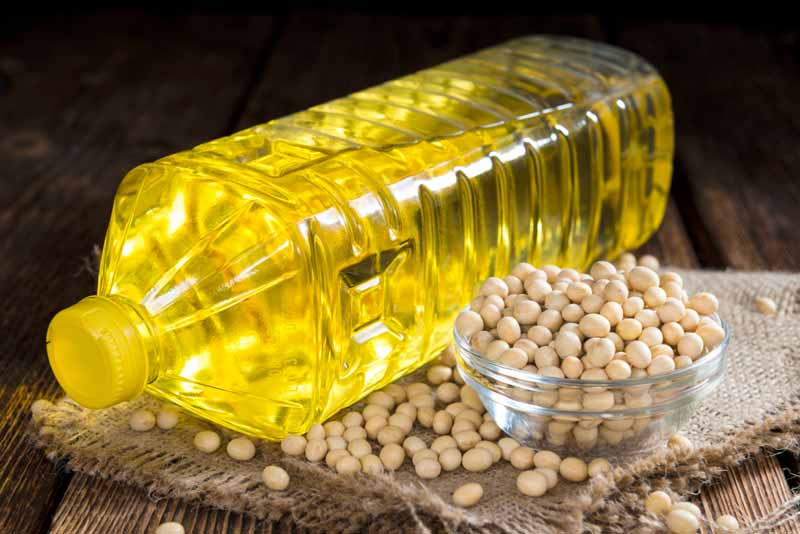
It is the most commonly used edible oil in the world and one of the most inexpensive. Soybean oil has a high linolenic acid content. Therefore, it is more unstable in the frying process and may leave a fishy taste on the fried food. An alternative is soybean oil with a high oleic acid content, but this comes at a higher price.

Sunflower oil
It is pale yellow colored and with a light taste, suppling more vitamin E Sunflower oil is pale yellow in color, has a delicate flavor and provides more vitamin E than any other vegetable oil. The oil is rich in polyunsaturated fatty acids and therefore less stable for the frying process. An alternative here is an expensive sunflower oil with a high oleic acid content.

Blended oils
This type of oils consists of a wide range of oils blended to give a particular characteristic to the product, such as frying stability, nutritional profile and cost. They may include cottonseed, corn, rapeseed, among others.

Pork lard and beef tallow
They are semi-solid fats at room temperature and give fried food a particular flavor profile. They used to be widely available but have fallen out of favor in recent years due to their high saturated fat content. It is a fairly stable frying medium. They are sometimes marketed as a blend with vegetable oils and fats, particularly palm oil.
The decision which frying oil is used is based on the nutritional facts, flavor profile, stability, availability as well as costs. If you want to learn more about frying oils characteristics and other frying oil technical topics, please contact FILTROX.
FILTROX EXPANDS MANUFACTURING SITE IN MEXICO

On its recent meeting, the Board of Directors of FILTROX has approved a proposal to enlarge the plant of FILTROX Columbia de México SA de CV in Tlalnepantla, Mexico. A new production line for depth filter media will approximately double the capacity of the existing plant. It is scheduled to be operational by the end of 2023. This investment comes in addition to the recently announced expansion of the FILTROX plant in Barnoldswick, UK.
Read the entire press release
FILTROX plans to expand manufacturing site in UK
The FILTROX’s Board of Directors has approved a investment to expand the capacity of its manufacturing site in Barnoldswick (UK). The existing buildings will be enlarged and partly replaced with new ones. The expansion project is scheduled to be completed in 2024. This will increase the capacity of the site by more than 50%. It will create a world-class facility for depth filter media. And this in full compliance with all quality standards of the food and pharmaceutical industries. This project supports the FILTROX Vision of being a global leader in depth filtration systems for valuable liquids.
The manufacturing site in Barnoldswick is already the largest manufacturing site of FILTROX worldwide. It benefits from a strategic location in an area with a strong industrial background, good logistic connections with immediate proximity to seaports, and, most importantly, a highly skilled, motivated, and experienced workforce. The planned investment to expand the UK site will further strengthen the position of the Barnoldswick site a as a world-class factory for depth filtration media.
The FILTROX manufacturing sites are continued to be supported by the FILTROX sales offices in Switzerland, UK, France, Spain, USA, Mexico, Singapore, and China. Their teams of sales engineers and logistics specialists provide filtration consulting, application support, warehousing and delivery services. The aim of these activities is to offer the best possible depth filtration solution to customers around the world.
Read the entire press release …

The New PURASPIN® Centrifuge Filter
Select here a manufacturer …
Vulcan
| Vulcan Model | Dimensions | SuperSorb® Carbon Pad Type |
|---|---|---|
| Vulcan Built-in Universal Unifit Size | 9.6″ × 15.0″ | F-16 |
30 filter pads per carton
Ultrafryer
| Ultrafryer Model | Dimensions | SuperSorb® Carbon Pad Type |
|---|---|---|
| Ultrafryer Built-in Large Unifit Size | 17.75″ × 17.75″ | F-95 |
30 filter pads per carton
RTI
| RTI Model | Dimensions | SuperSorb® Carbon Pad Type |
|---|---|---|
| RTI 50# Portable | 15.0″ × 21.0″ | F-81 |
| RTI 65# Portable | 18.25″ × 25.5″ | F-68A |
| RTI 100# Portable | 18.25″ × 25.5″ | F-68A |
30 filter pads per carton
RF Hunter
| RF Hunter Model | Dimensions | SuperSorb® Carbon Pad Type |
|---|---|---|
| RF Hunter Portable Medium Unifit Size | 12.5″ × 15.0″ | F-40 |
30 filter pads per carton
Re-Nu
| Re-Nu Model | Dimensions | SuperSorb® Carbon Pad Type |
|---|---|---|
| Re-Nu A-95 Portable | 21.75″ diameter | F-42 |
| Re-Nu A-50 Portable | 15.75″ diameter | F-35 |
30 filter pads per carton
Prince Castle
| Prince Castle Model | Dimensions | SuperSorb® Carbon Pad Type |
|---|---|---|
| Prince Castle Portable | 21.875″ diameter | F-44 |
30 filter pads per carton
Pitco
| Pitco Model | Dimensions | SuperSorb® Carbon Pad Type |
|---|---|---|
| Small Universal Unifit Size | 9.6″ × 15.0″ | F-16 |
| Medium Universal Unifit Size | 12.5″ × 15.0″ | F-40 |
| Large Universal Unifit Size | 13.875″ × 19.875″ | F-45 |
| Large Universal Unifit Size | 17.75″ × 17.75″ | F-95 |
| Pitco ROV Envelope | 14.25″ × 19.25″ | F-92 |
| Pitco Solo | 9.6″ × 15.0″ | F-16 |
| Pitco Solo/ROV Envelope | 9.875″ × 18.75″ | F-99 |
| Pitco Solstice | 13.875″ × 19.875″ | F-45 |
| Pitco Solstice | 17.75″ × 17.75″ | F-95 |
| Pitco Solstice/ROV Large Envelope | 18.0″ × 18.5″ | F-98 |
| Pitco AGF | 11.25″ × 19.16″ | F-24 |
| Pitco SG High Efficiency Pan | 19.16″ × 19.16″ | F-87 |
| Pitco P-14 Portable | 13.5″ × 24.0″ | F-94 |
| Pitco P-18 Portable | 17.5″ × 27.875″ | F-96 |
Mies
| Mies Model | Dimensions | SuperSorb® Carbon Pad Type |
|---|---|---|
| Mies P20 Portable | 21.875″ diameter | F-44 |
Keating
| Keating Model | Dimensions | SuperSorb® Carbon Pad Type |
|---|---|---|
| Keating Built-in Large Unifit Size | 17.75″ × 17.75″ | F-95 |
Henny Penny
| Henny Penny Model | Dimensions | SuperSorb® Carbon Pad Type |
|---|---|---|
| Universal Unifit Size | 9.6″ × 15.0″ | F-16 |
| Medium Unifit Size | 12.5″ × 15.0″ | F-40 |
| Henny Penny Evolution Elite | 11.25″ × 19.16″ | F-24 |
| Henny Penny Evolution Elite | 11.25″ × 19.16″ | F-23 LV High Profile |
| Henny Penny Built-in | 14.75″ × 22.0″ | F-33 |
| Henny Penny LOV | 11.25″ × 19.16″ | F-24 |
| Pressure and Open Cold-Zone Fryer Envelope (3-4 VAT) | 13.75″ × 19.875″ | F-91 |
| Open Cold-Zone Fryer Envelope (1-2 VAT) | 12.5″ × 19.875″ | F-74 |
30 filter pads per carton.
Frymaster
| Frymaster Model | Dimensions | SuperSorb® Carbon Pad Type |
|---|---|---|
| Frymaster OCF / FC | 11.25″ × 19.16″ | F-24 |
| Frymaster OCF / FC | 11.25″ × 19.16″ | F23 LV High Profile |
| Frymaster 1814 | 15.75″ × 18.75″ | F-69 |
| Frymaster Footprint 2 | 12.5″ × 20.5″ | F-18A |
| Frymaster Portable New Size | 12.375″ × 17.375″ | F-20B |
| Frymaster Footprint Pro | 14.75″ × 22.0″ | F-33 |
| Frymaster Footprint 3 | 14.125″ × 21.0″ | F-54 |
| Frymaster Filtermagic 2 (Old) | 11.625″ × 21.5″ | F-55 |
| Frymaster Filtermagic 2 (New) | 11.563″ × 23.125″ | F-56 |
| Frymaster/Dean Super Cascade SCFS model | 15.75″ × 18.75″ | F-69 |
| Frymaster PF-80 and PF-110 portable | 15.75″ × 18.75″ | F-69 |
30 filter pads per carton.