
All posts by Fosca Roman

the risk of leaving the fryer uncovered

The hidden risks of leaving your fryer uncovered at night

From fine dining to fast food, every restaurant sets up some kind of checklist for closing. Common tasks include taking out the trash, cleaning counters and floors, checking and cleaning restrooms, cleaning ovens and cookers, and much more, with the objective being to get the restaurant clean and ready for the following day’s service.

If the restaurant in question has deep-fat fryers, it’s important that they not be neglected in the closing process. End of the day activities for fryers should include scooping out food residue, filtering and/or treating the oil in the fryer, properly cleaning the fryers and topping off the fryer with fresh oil as necessary.

The final step

When all of this is done, be sure to remember the all-important final step! Cover the fryer pot with a cover designed to fit once the fryer is turned off and cooled, of course. Two components that accelerate oil degradation are light and exposure to air. Keeping a fry pot covered will help reduce this exposure.

To avoid the risk of contamination of the cooking oil overnight, remembering to replace the cover is crucial.  Do not leave the fryer uncovered. But why cover it if it is going to be heated up the next morning? Whatever falls in will be killed, right? This may not be the case for the cleaning compounds used on the floors, counters, ovens, or anywhere else during the cleaning process. Cleaning compounds contain metals such as sodium, calcium, and magnesium, and it only takes a little bit of any of these falling in during the cleaning process to ruin a fryer full of oil. The risk of contamination is also why the neutralization step previously mentioned is so important.

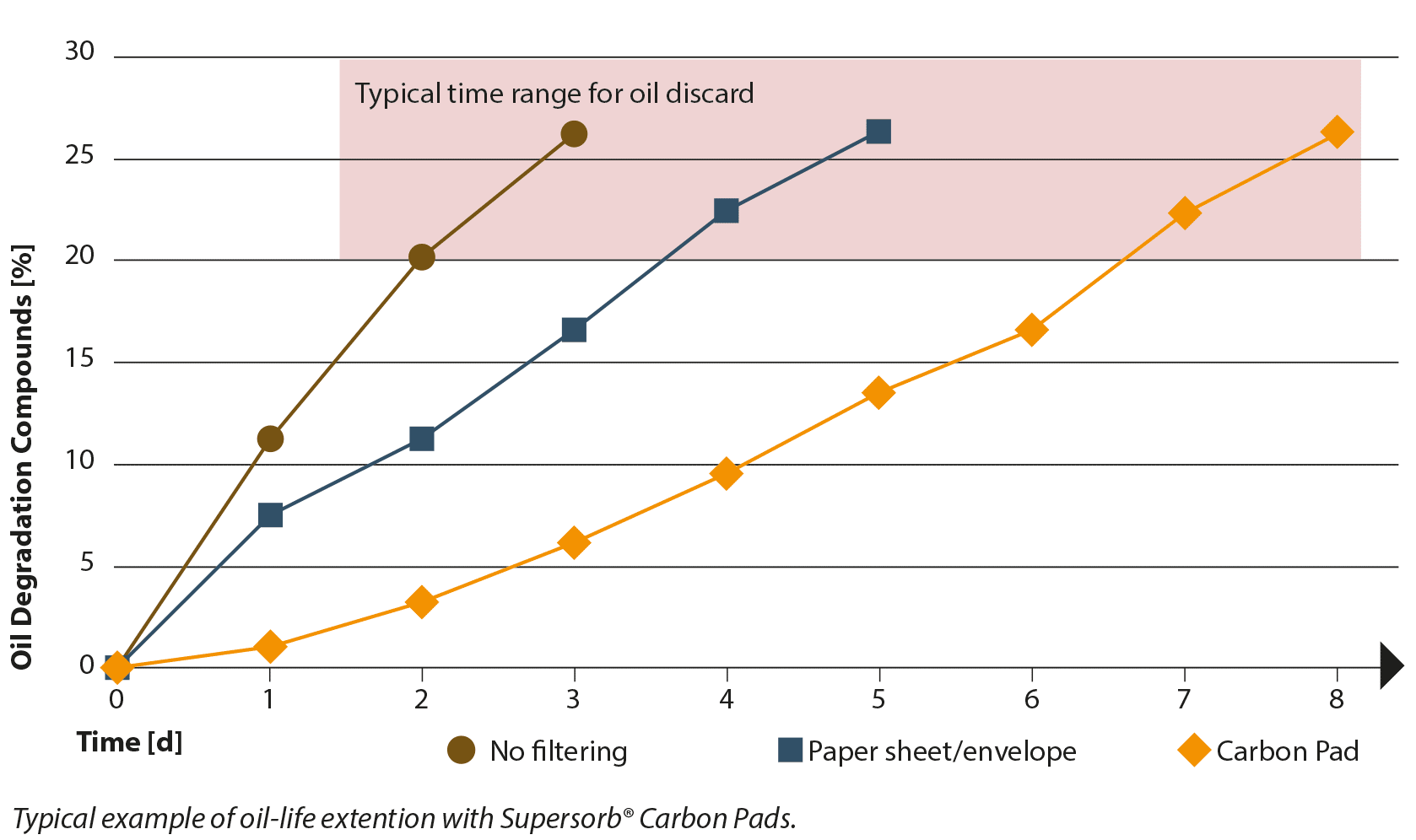
Follow your closing checklist to the letter! Make sure that the fryer is covered before you turn out the lights and lock the door. Proper frying techniques along with using FILTROX’s SuperSorb® pads help maximize the life of your frying oil.

More about frying oil filtration …

when is the right time to discard frying oil? maintenance schedule.

The importance of a frying oil maintenance schedule

A frying oil maintenance schedule is important when it comes to the quality of food being sent out of your kitchen.

Several external factors can cause the breakdown of your frying oil. Light, soaps and oxygen can contribute to the oxidation of oil. While we cannot prevent the exposure of oil to air, we can limit oil’s exposure to certain light. Avoid fluorescent lights if possible. Ultraviolet light damages fats and oils. Contaminants can come from many sources including the types of food being fried, the application of seasonings to fried foods, poor cleaning practices which may leave soaps or detergents in the fryer or poor maintenance practices.

Proper maintenance of your frying oil consists of following a few steps that will prolong the life of your oil. Consider incorporating the following into your maintenance schedule and routine.

  1. Shake ice crystals off frozen foods before putting them in the fryer
  2. Avoid seasoning or salting food over the fryer to keep debris down
  3. Filter oil using a skimmer to pull larger sediments out
  4. Turn off or reduce fryer temperature at slow times to keep from oil breaking down at faster rate
  5. Cover your fryers at the end of day

In addition to these best practices, it’s imperative to track the quality of your oil throughout the day to keep oil fresh. For best results we recommend checking the oil twice daily.  Download our free monthly frying oil log to track changes in your fryer’s oil. To extend the life of your oil, consider switching to SuperSorb® products that remove contaminants from the oil down to 0.5 micron. Contact our experts for more information.

frying oil filtration tips: canola versus peanut oil

Canola vs. Peanut Oil

Oils that contain higher amounts of monounsaturated fats, such as canola and peanut oil, tend to be among the healthier options since they help lower your low-density lipoprotein or bad cholesterol. While at the same time increasing your good cholesterol. Understanding the composition, smoke point and flavors of these oils can help you determine which is the best to use with different foods or situations. Here a comparison of canola vs. peanut oil:

Canola Oil

Canola oil is one of the oils highest in monounsaturated fat, with 62%, along with 7% saturated fat and 31% polyunsaturated fat. After olive and sunflower oil, canola is the next highest in heart-healthy monounsaturated fats. It can be used as a salad dressing and for baking and frying. This neutral-tasting oil is obtained from rapeseed, a mustard relative. Because rapeseed is commonly sprayed with pesticides, be sure to look for organic, expeller-pressed brands of canola oil. You’ll find it already added to foods such as oven-baked chips and frozen fish fillets. But with a high smoke point of around 205 °F (96 °C) canola is a good all-purpose cooking oil. It does become unstable after heating, so never reuse.

Peanut Oil

Peanut oil is higher in saturated fat, with 18%, making it slightly less healthy than canola oil, but it still contains 48% monounsaturated fat and 34% polyunsaturated fat. An all-purpose oil that’s high in monounsaturated fats, peanut oil is also about 30% polyunsaturated fats and 20% saturated. Because it has a high smoke point, it’s prized for frying. Most commercial brands are chemically processed, though expeller-pressed brands are available at specialty stores and online. Peanut oil has a longer shelf life than other oils. Best for Asian cooking, especially stir-fries.

Go to the frying oil filtration page and find out how SuperSorb Carbon Pads can extend frying oil life

The key to consistent and quality fried chicken

The Key to Consistent and Quality Fried Chicken

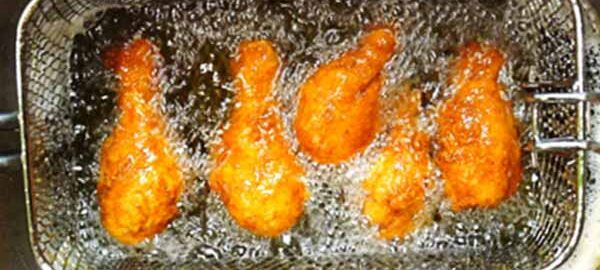
When prepared and cooked properly, fried chicken can be one of the world’s most delicious foods. Whether it’s Korean fried chicken, which has a light and crunchy batter, Nashville hot chicken tossed in a spicy, oil-based sauce, or the classic Southern fried chicken that many of us are used to.

Fried chicken and other battered deep-fried foods require a temperature of 350 – 375 °F (176 °C – 190 °C) to maintain a crispy outside without absorbing the oil and becoming greasy. For these foods, you’ll want to select a frying oil with a high smoke point to maintain consistent quality and flavor. Vegetable oil is always a good choice because of its neutral flavor and affordability, particularly if you are a large volume foodservice operation and need to continuously prepare a large amount. When chicken is fried, fat is rendered from the chicken into the frying oil, so over time what was once a liquid oil at room temperature, will become a hard fat due to the rendering process.

It’s also important to establish educational components in your frying operation. Operators must learn the proper frying and cleaning techniques in order to produce the most consistent food quality.

These guidelines should include:

  • Proper maintenance of the fryer
  • Proper cleaning of the fryer
  • Proper fryer operation
  • Management of frying temperatures
  • Avoiding contact with metals such as copper and bronze
  • Proper food handling
  • Filtering or treating oil

Properly managing oil may also help keep the fryers cleaner. Some operators have reported that one benefit of treating oil has been a reduction of polymer formation, which allows restaurants to not only reduce chemical usage, but allows a “greener” cleaning chemical.

With FILTROX’s SuperSorb® Filter technology, making fried chicken is cleaner and easier than ever. The uniquely patented design of SuperSorb® works to filter oil to a nano, invisible 0.5 micron, trapping pollutants and contaminants that would normally stay in the oil leading to faster breakdown.

Ramp up your frying operation and produce better tasting, more consistent deep-fried chicken with the help of SuperSorb® CarbonPads. Contact FILTROX today to learn more!

Pitco

Pitco ModelDimensionsSuperSorb® Carbon Pad Type
Small Universal Unifit Size9.6″ × 15.0″F-16
Medium Universal Unifit Size12.5″ × 15.0″ F-40
Large Universal Unifit Size13.875″ × 19.875″ F-45
Large Universal Unifit Size17.75″ × 17.75″ F-95
Pitco ROV Envelope14.25″ × 19.25″ F-92
Pitco Solo9.6″ × 15.0″ F-16
Pitco Solo/ROV Envelope9.875″ × 18.75″ F-99
Pitco Solstice13.875″ × 19.875″ F-45
Pitco Solstice17.75″ × 17.75″ F-95
Pitco Solstice/ROV Large Envelope18.0″ × 18.5″ F-98
Pitco AGF11.25″ × 19.16″ F-24
Pitco SG High Efficiency Pan19.16″ × 19.16″ F-87
Pitco P-14 Portable13.5″ × 24.0″ F-94
Pitco P-18 Portable17.5″ × 27.875″ F-96

Henny Penny

Henny Penny ModelDimensionsSuperSorb® Carbon Pad Type
Universal Unifit Size9.6″ × 15.0″F-16
Medium Unifit Size12.5″ × 15.0″ F-40
Henny Penny Evolution Elite11.25″ × 19.16″ F-24
Henny Penny Evolution Elite11.25″ × 19.16″ F-23 LV High Profile
Henny Penny Built-in14.75″ × 22.0″F-33
Henny Penny LOV11.25″ × 19.16″ F-24
Pressure and Open Cold-Zone Fryer Envelope (3-4 VAT)13.75″ × 19.875″ F-91
Open Cold-Zone Fryer Envelope (1-2 VAT)12.5″ × 19.875″ F-74

30 filter pads per carton.

Frymaster

Frymaster ModelDimensionsSuperSorb® Carbon Pad Type
Frymaster OCF / FC 11.25″ × 19.16″ F-24
Frymaster OCF / FC11.25″ × 19.16″ F23 LV High Profile
Frymaster 181415.75″ × 18.75″ F-69
Frymaster Footprint 212.5″ × 20.5″ F-18A
Frymaster Portable New Size12.375″ × 17.375″F-20B
Frymaster Footprint Pro14.75″ × 22.0″ F-33
Frymaster Footprint 314.125″ × 21.0″ F-54
Frymaster Filtermagic 2 (Old)11.625″ × 21.5″ F-55
Frymaster Filtermagic 2 (New)11.563″ × 23.125″ F-56
Frymaster/Dean Super Cascade SCFS model15.75″ × 18.75″ F-69
Frymaster PF-80 and PF-110 portable15.75″ × 18.75″ F-69

30 filter pads per carton.

Dean

Dean ModelDimensionsSuperSorb® Carbon Pad Type
Dean MF90 Models 12 & 14 Dean Portable 80# & 110#16.25″ × 18.25″F-38
Dean MF90 Models 18 & 20 Dean Portable 126#,172# Dean SCF 75# 15.875″ × 24.125″ F-60
Dean Super Cascade SCFS model 15.75″ × 18.75″ F69